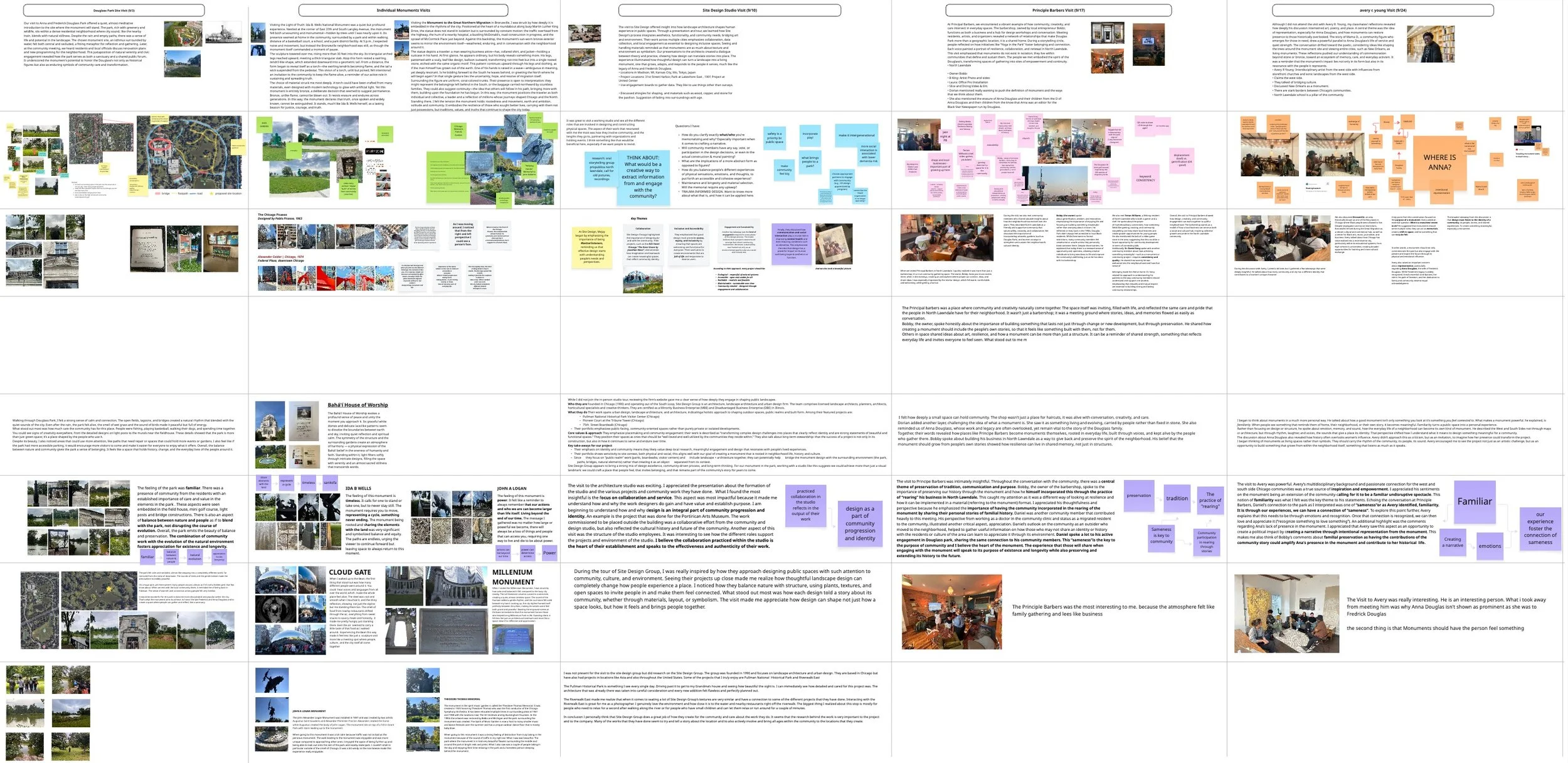
COMMUNITY RESEARCH
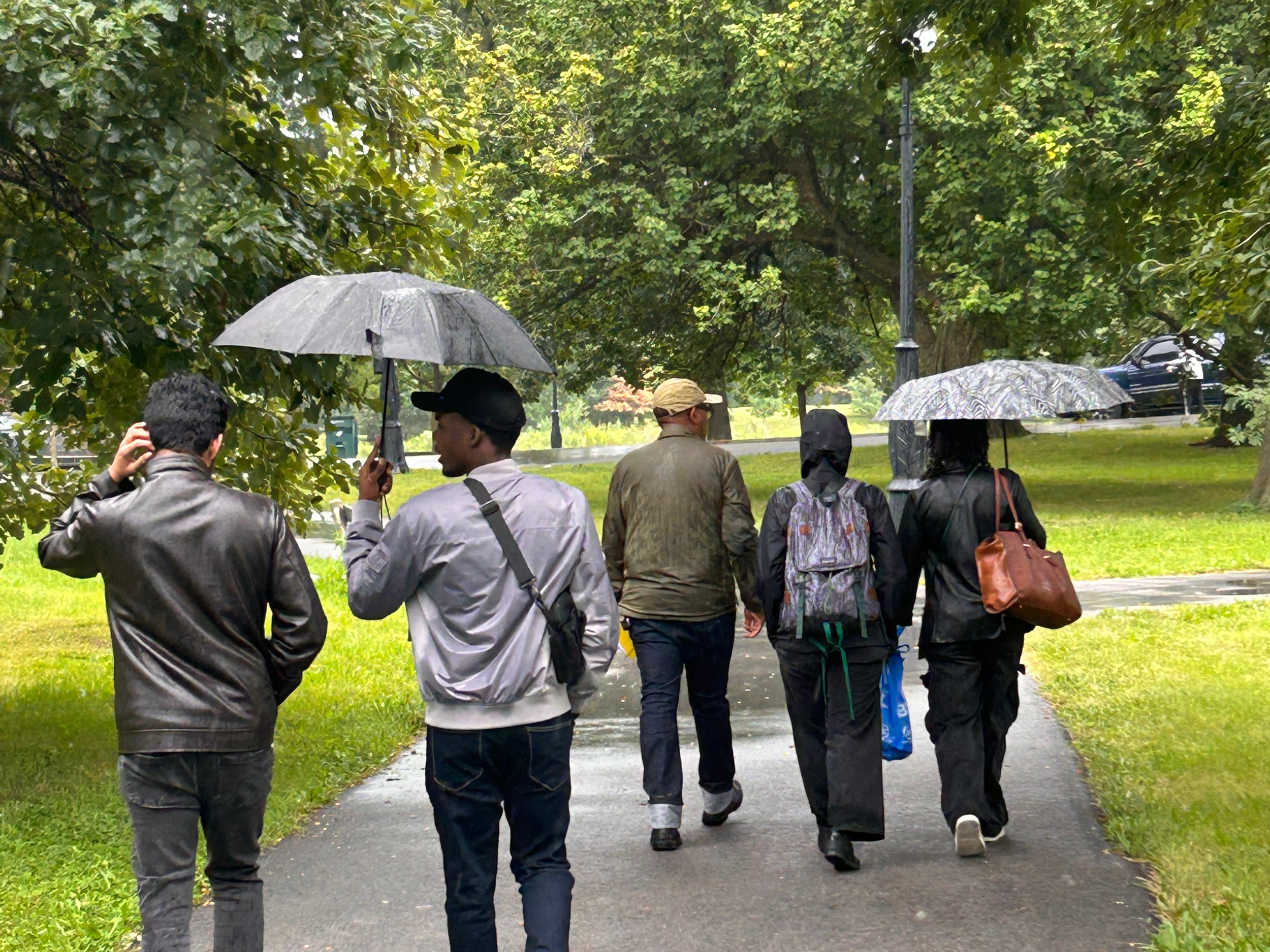
Anna & Frederick Douglass Park Visit
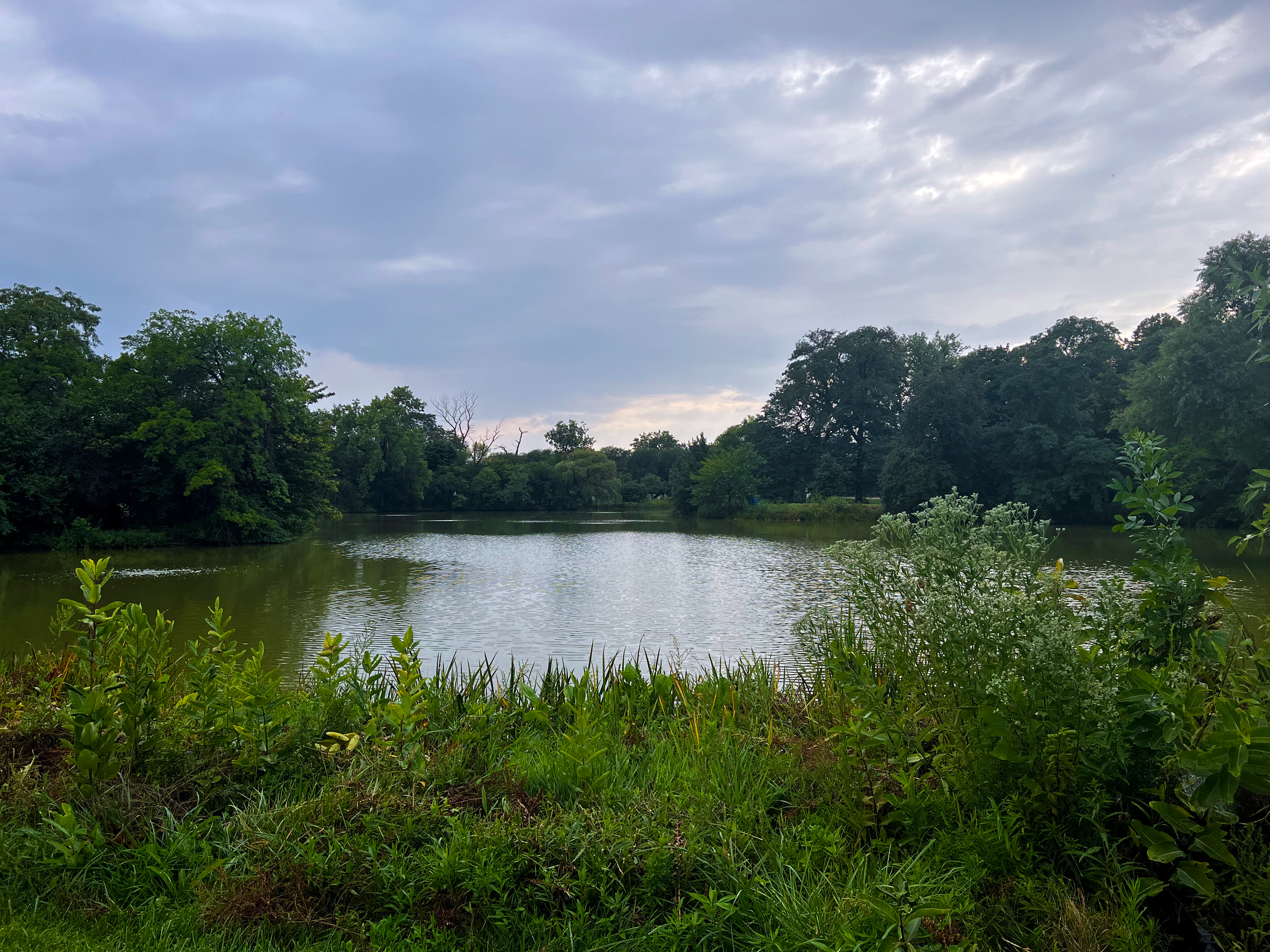
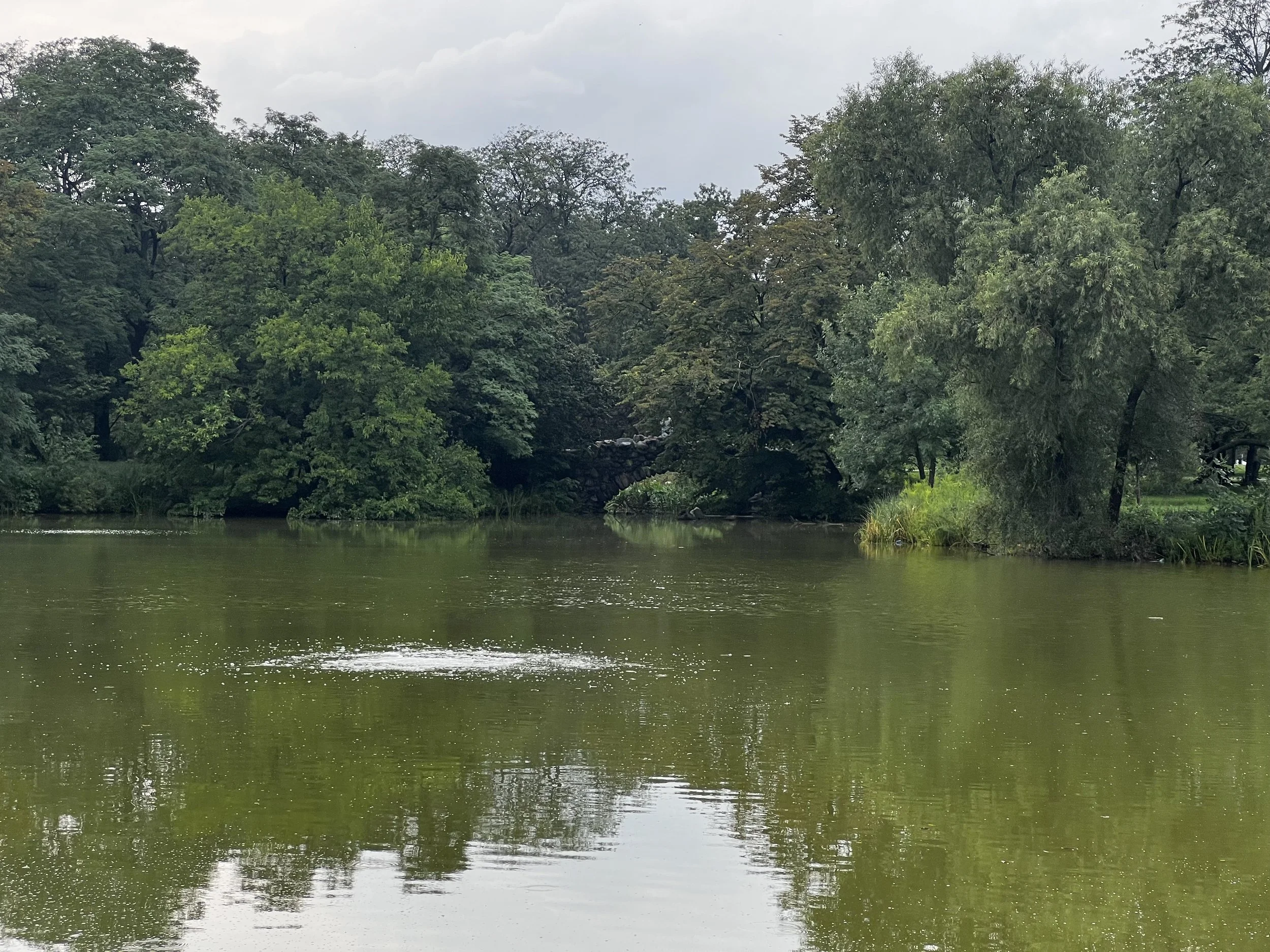
Anna and Frederick Douglass Park reflects an enduring history of transformative community care, resilience, and preservation. The park, rich with nature and wildlife, serves as one of many integral “green breathing spaces” for Chicago’s West Side communities. Brimming with familiarity of urban sounds of culture and recreation, the local neighborhood shows strong propriety of the park, modeling the beautiful synthesis of urban nature, history, and community life.
The perfect harmony of community and nature, the Anna and Frederick Douglass Park provides the ideal introduction to the Ana and Frederick Douglass Pavillion. The chosen monument site, both central and secluded in its location, offers a quiet, almost meditative isthmus–a fitting metaphor for reflection and gathering. The presence of the pavilion will serve as a familiar sanctuary of natural civic serenity in honor of the Douglass’s family while fostering appreciation for existence and longevity.
Site Design Group Ltd. Visit
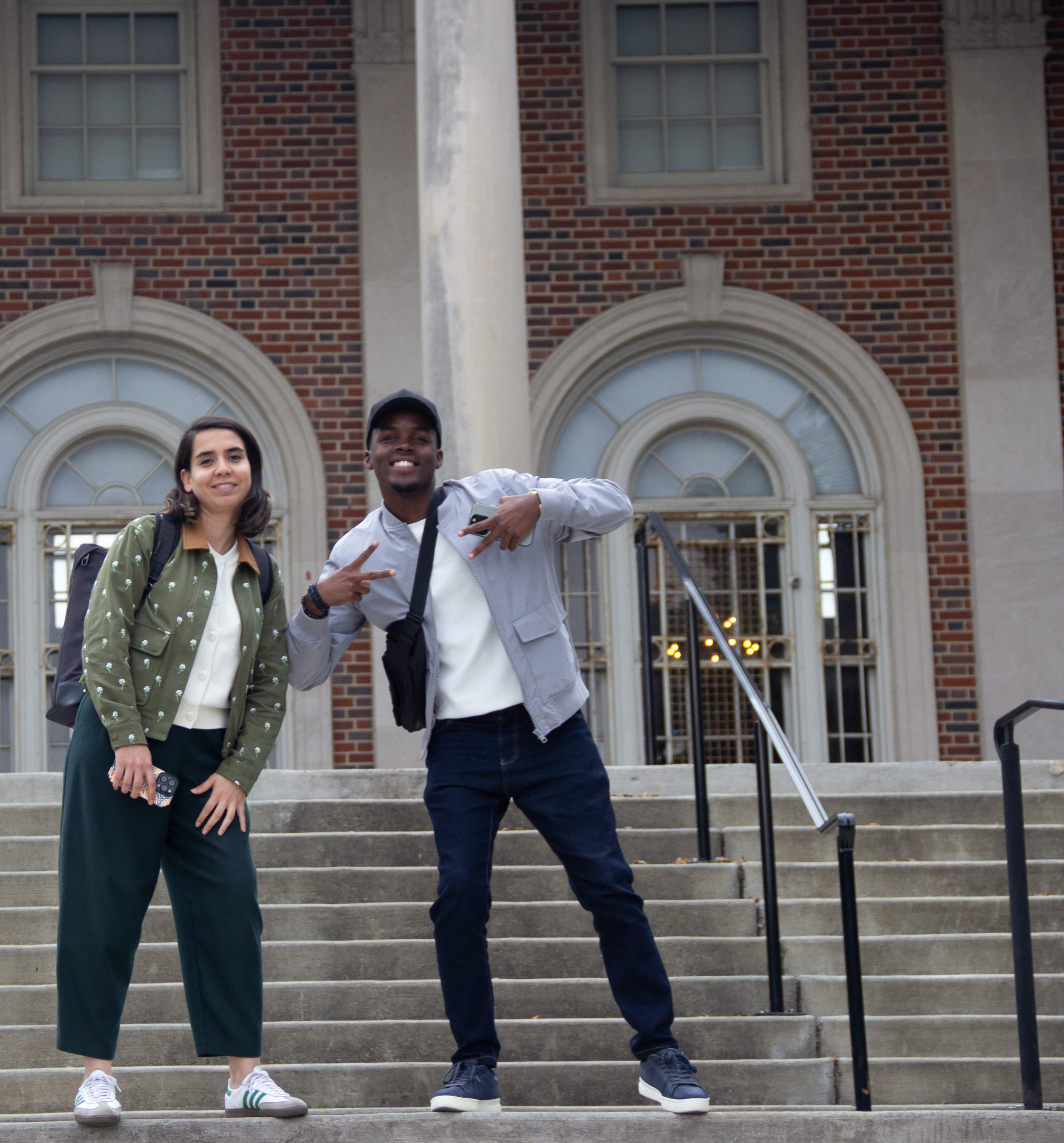
Our visit to Site Design Group, Ltd. gave a clearer understanding of how landscape architecture shapes everyday life and how design can honor the stories of a community. We saw how the firm brings together landscape architecture, urban design, planning, and public art, and how each project starts with listening. The team emphasized that to design well, we must first understand the people who will use the space and the histories that live there.
We learned that Site Design’s approach focuses on making spaces that are ecological, accessible, buildable, maintainable, and grounded in community needs. This helped us rethink monuments not as fixed statues or markers, but as living environments; places that grow and change as people interact with them.
We were especially struck by the ways Site Design involves community voices in their projects. Instead of relying only on surveys or distant feedback, they create hands-on engagement opportunities, workshops, creative outreach tools, and partnerships with local groups that ensure public spaces reflect the identity of the people who use them. Projects like the 31st Street Harbor, Lakeshore East Park, and the Puerto Rican Arts Museum showed us how stories and cultural memory can be translated into physical form.
As a class, we also connected this to our work on Douglass Park and the legacy of Anna and Frederick Douglass. Some of us reflected on our own visits to Douglass Park and saw how it functions as a “breathing space” for the neighborhoods around it; where families gather, kids play, sports happen, and nature offers a break from the city. We noticed how murals, community events, and everyday activity make the park meaningful, and we also recognized where more investment, care, and accessibility are needed. This helped us understand that public spaces require ongoing stewardship, not just initial design.
Those of us who researched Site Design Group further learned how their work extends across Chicago and beyond, including projects such as Pullman National Historical Park and Riverwalk East. We saw how their use of materials; stone, wood, copper, reflects an intention to show how spaces age, weather, and continue to hold memory over time. We also recognized how their design encourages gathering, rest, and play across generations.
Design is collaborative: Spaces become meaningful when shaped with the community.
Public spaces tell stories: Landscapes are cultural narratives in physical form.
Accessibility and care matter: Designing for emotional and physical well-being is essential.
Sustainability is social: Caring for land and caring for community are interconnected.
Monuments can be living: They grow through use, participation, and shared memory.
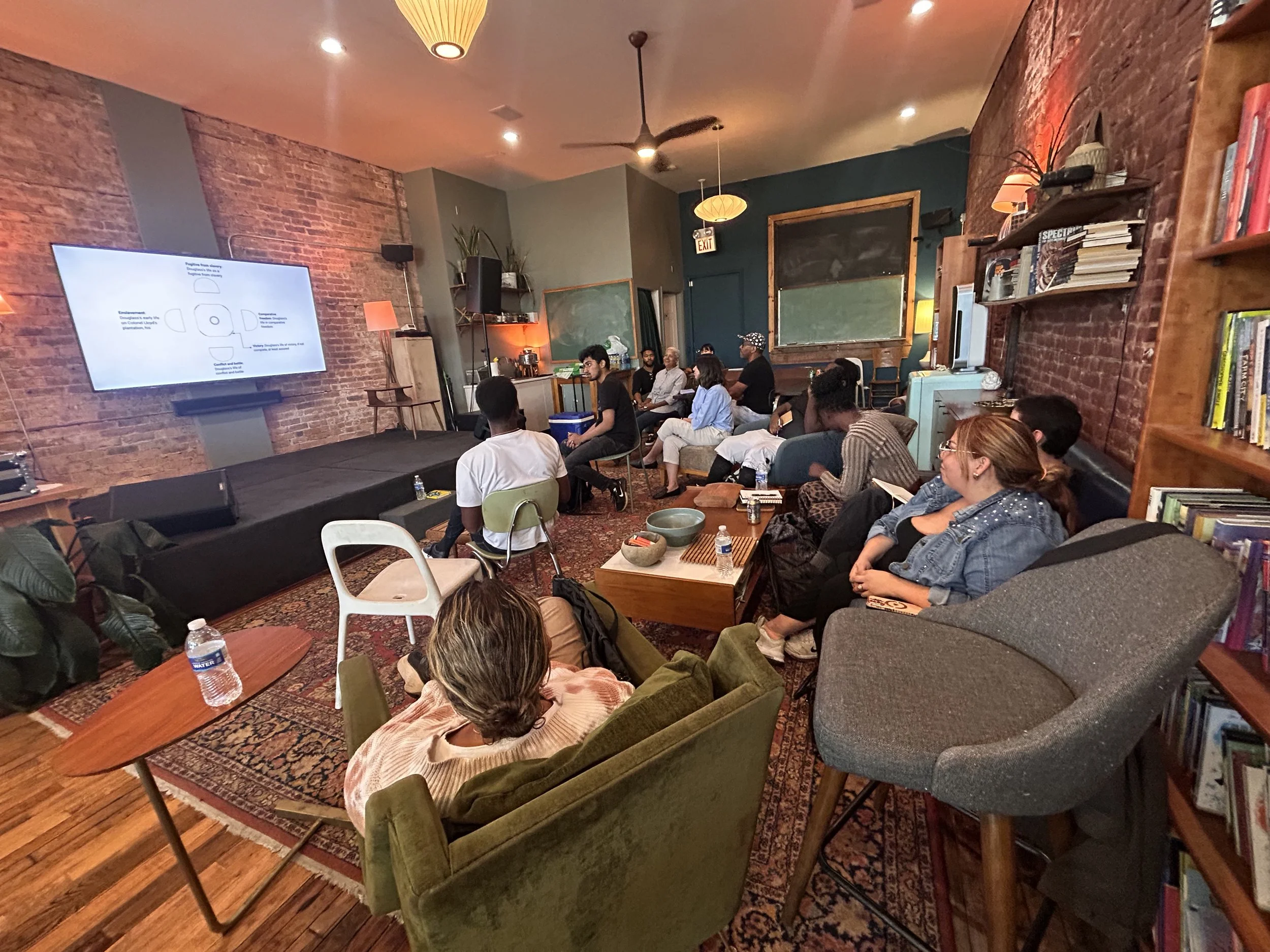
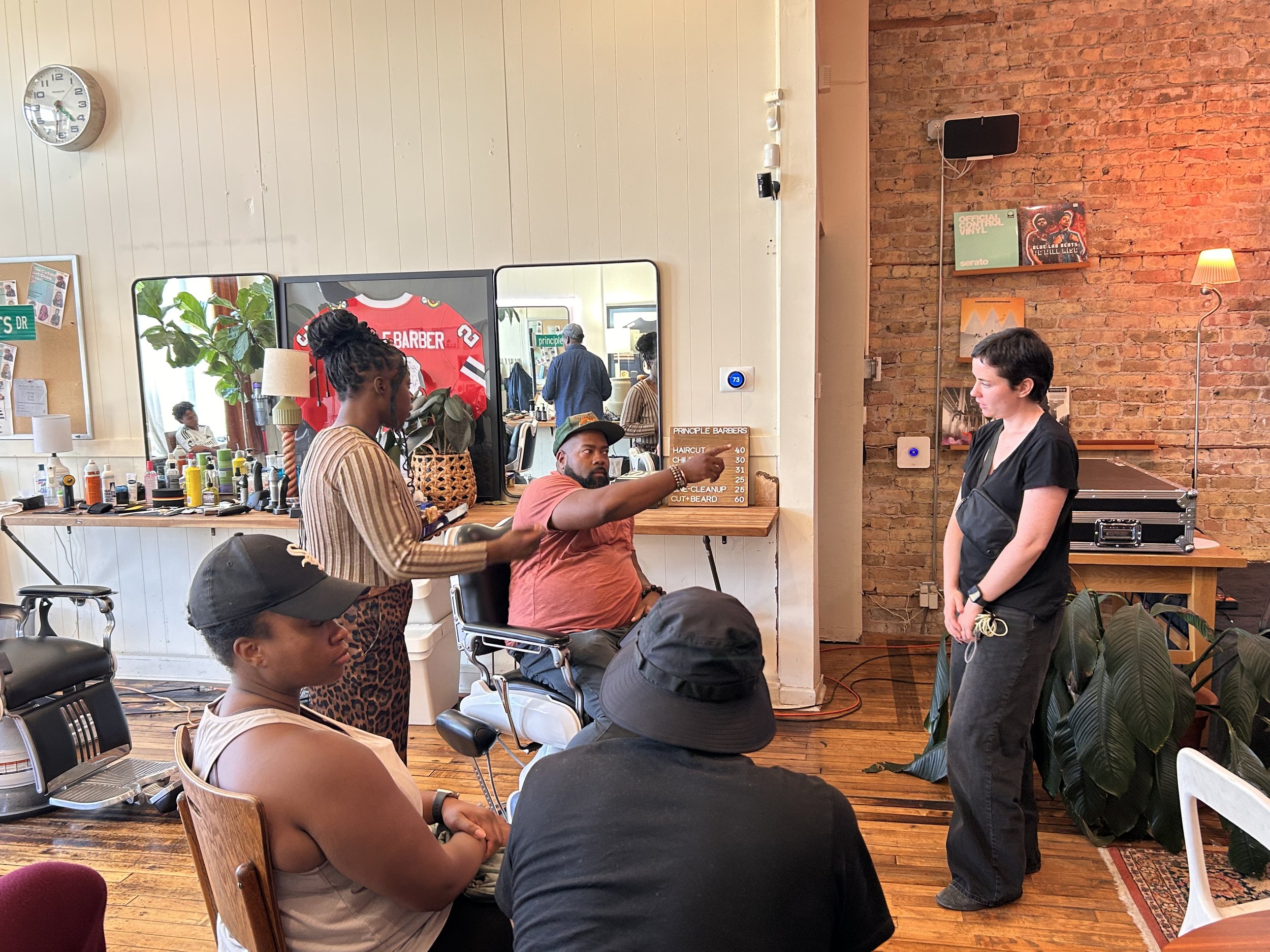
A central theme was the rethinking of what a monument can be. Rather than a static statue or historical marker, several community members, including Dorian Sullivan, framed monuments as living systems, sustained by the stories, care, and relationships within a place. Principal Barbers serves as a monument not because of its structure, but because of the people who inhabit, shape, and remember it.
This idea connected strongly to discussions about Anna Douglass. We emphasized her critical yet often overlooked role as editor of the Black Star newspaper and as a co-visionary in the Douglass family’s activism. The group reflected on how memory work can itself be an act of repair, naming those whose contributions have been historically minimized.
Bobby’s own reflections reinforced this. He spoke about building the business in North Lawndale as an act of preservation, a way to honor the families and histories that make the neighborhood what it is. He emphasized that a true monument should be made with a community, not simply placed on it.
Principle Barbers Visit
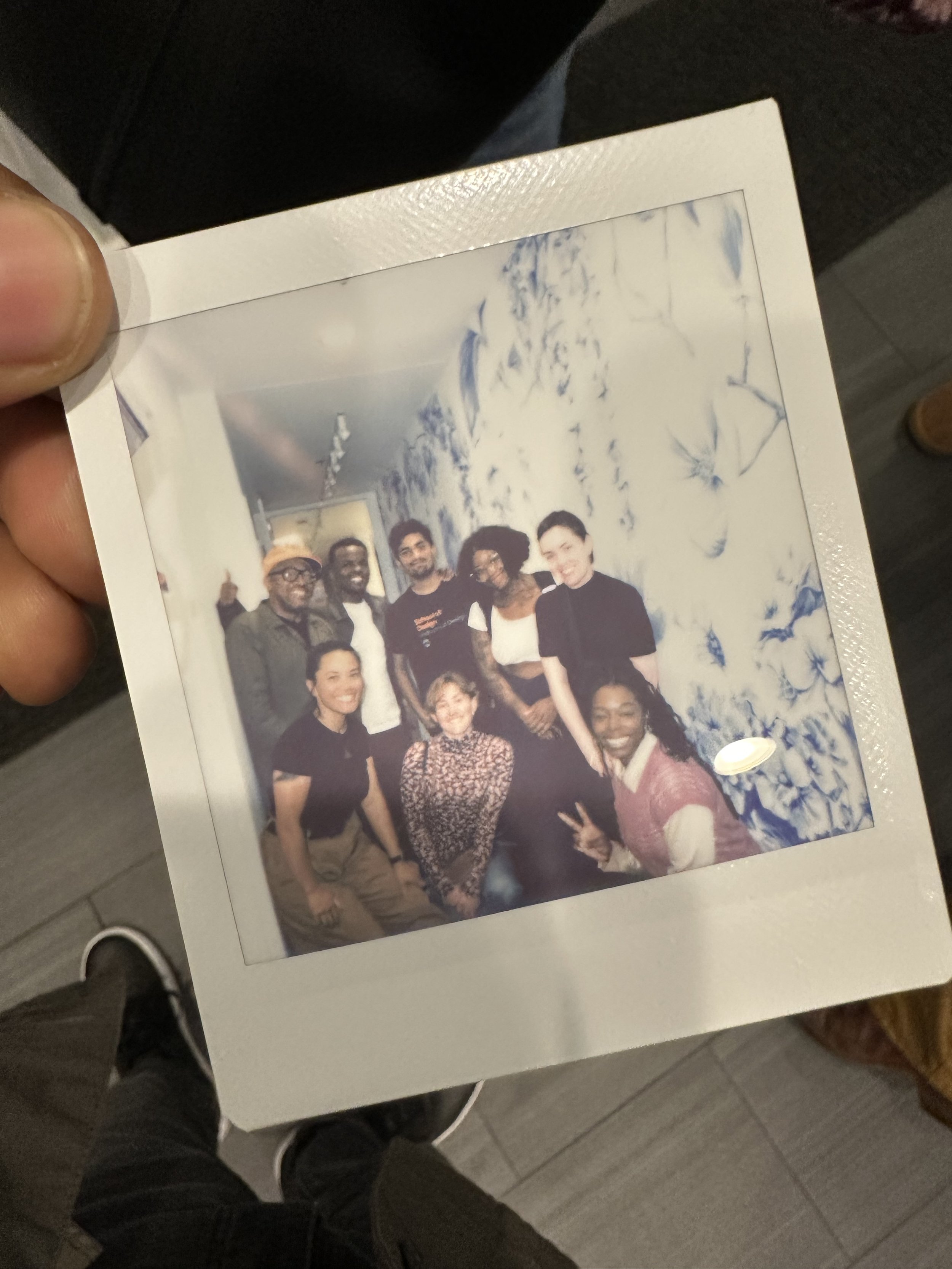
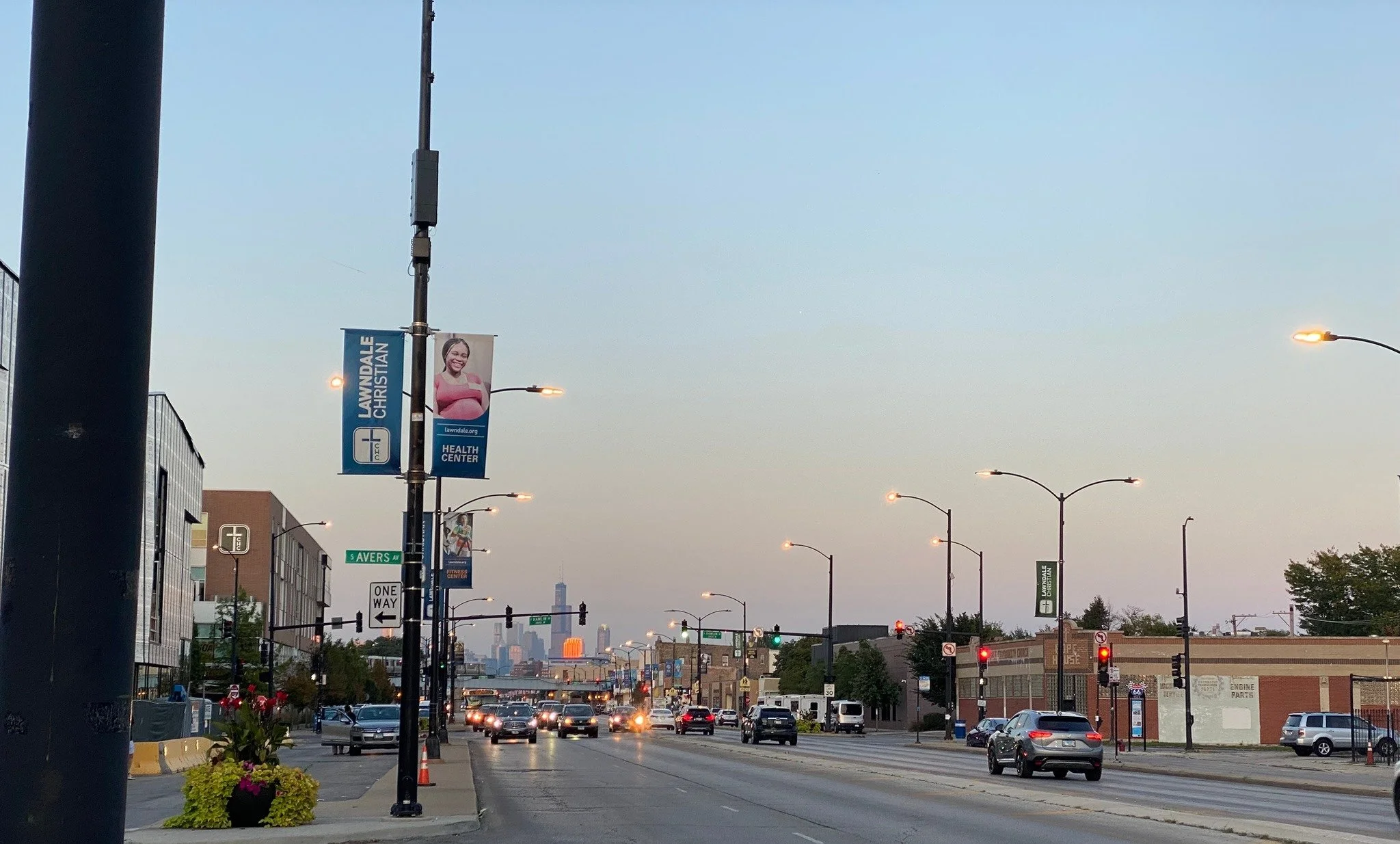
The visit to Principle Barbers highlighted how a neighborhood business can function as a living monument to community care, creativity, and resilience. Owned by Bobby Price, the barbershop is more than a place for haircut, it is a cultural hub where conversation, music, mentorship, art, and memory converge. We observed how the space itself feels alive: warm, inviting, and layered with personal histories that reflect pride in North Lawndale’s legacy.
Across conversations with residents, artists, organizers, and professionals, we consistently encountered themes of belonging, stewardship, and redefinition. Many noted how deeply a small space can hold community, becoming a keeper of shared memory through the everyday presence of people who return, talk, and create together.
Other participants, like Terran Williams, described creating “digital third spaces” for youth, online communities where creativity and identity can flourish. Dr. Daniel Song connected empathy and care from his medical practice to practices of community solidarity, reminding us how small gestures of appreciation can sustain collective life.
Across all conversations, we came away with the understanding that monuments live through people and spaces, not just through physical memorials. Principal Barbers embodies the same collaborative, educational, and community-driven principles that shaped Anna and Frederick Douglass’s work. It stands as a reminder that heritage and hope can be held in everyday places, and that storytelling, gathering, and shared presence are themselves acts of resilience.
Visit with avery r. young at the Margaret Burroughs House
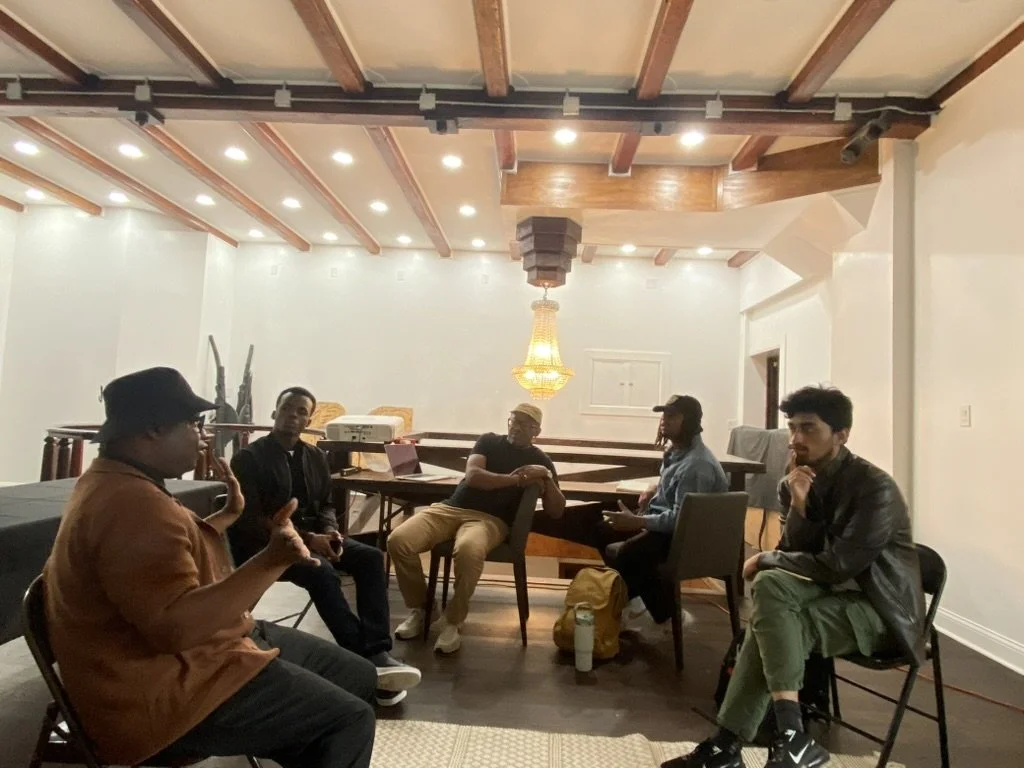
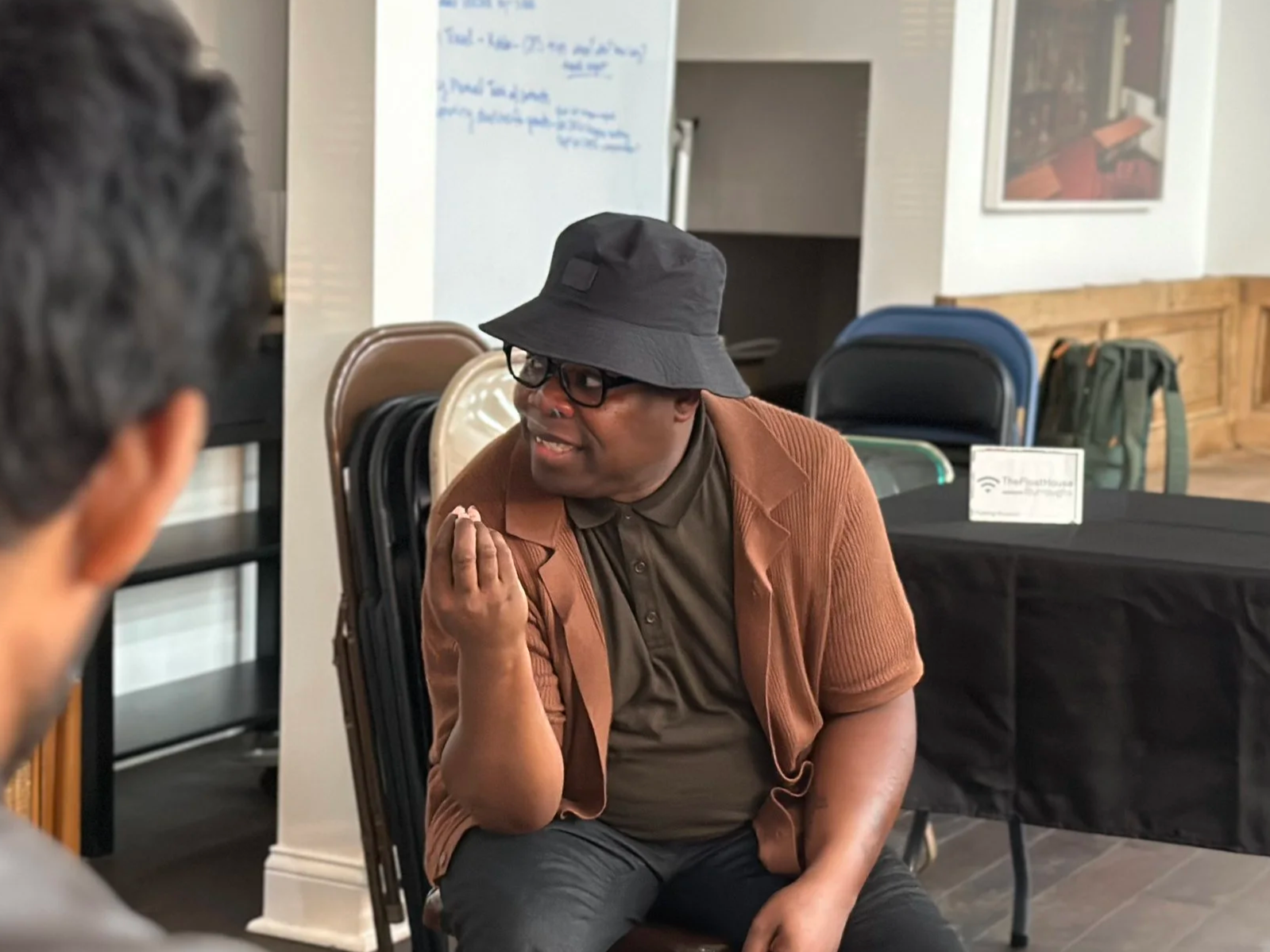
The visit to the historic Margaret Burroughs House was a powerful and enlightening experience in this project. avery r. young is an interdisciplinary artist, poet and educator, embodying the creative spirit of Chicago’s West and South Sides. Young’s insight and wisdom carried both weight in history and community, providing a vision of art as a bridge between memory, identity and community.
Young spoke to the living essence of communities and their tangible feel shaped by unique characteristics of culture, sounds, and shared experiences. He described how neighborhoods like Bronzeville, a historically Black Chicago neighborhood, thrived during the Great Migration despite segregation and social restrictions. The vibrant rhythms, textures, and even tastes of Black cultural hubs and commercial businesses, not only distinguished these neighborhoods, but defined them. “You have to recognize something in order to love it”, stated Young, connecting the idea of familiarity to how communities relate to their environments. This theme reframed our perspective on representation, understanding that the success of the monument lies not in its structure, but as living spaces with the ability to evoke emotions and stories into a transformative personal experience.

The topic of representation centered our studio’s motivation to address the historical aspect of our Anna and Frederick Douglass monument design. Young’s question“Where is Anna Douglass?”, prompted us to think beyond the monument design and challenged us to focus on its meaning. A monument, he suggested, should not only commemorate the past but also be felt emotionally, spiritually, and physically to engage the present and inspire the future. While the current monument's structure symbolizes Frederick Douglass’s life, Anna’s presence is notably missing. Young emphasized the significance of Anna’s foundational contributions: she helped Federick attain freedom, raised their five children, supported his newspaper and maintained a resource center for the Underground Railroad for fugitive slaves. Her story is one of quiet strength and indispensable partnership. Young saw this omission not as a critique, but as an opportunity for intentional representation through a political and cultural statement, and a chance to correct the narrative of Anna’s life by bringing visibility to the women who sustained movements of freedom and progress.
Ultimately, Avery’s insights remind us that meaningful design begins with empathy and recognition. His reflections positioned the monument not as an isolated structure, but as part of an ecosystem that carries the pulse of community memory, care, and everyday activism. Monuments should emerge from the identities of the communities they serve, honoring both collective memory and contemporary life. They should reflect not only celebrated figures like Frederick Douglass, but also the often-overlooked contributors, like Anna Douglass, whose stories sustain our understanding of freedom, resilience, and love. To design something truly resonant, we must allow the community’s voice to shape it. The Douglass monument, envisioned through this lens, becomes more than a commemorative site but a living, breathing testament to the people, histories, and shared humanity that define a community.