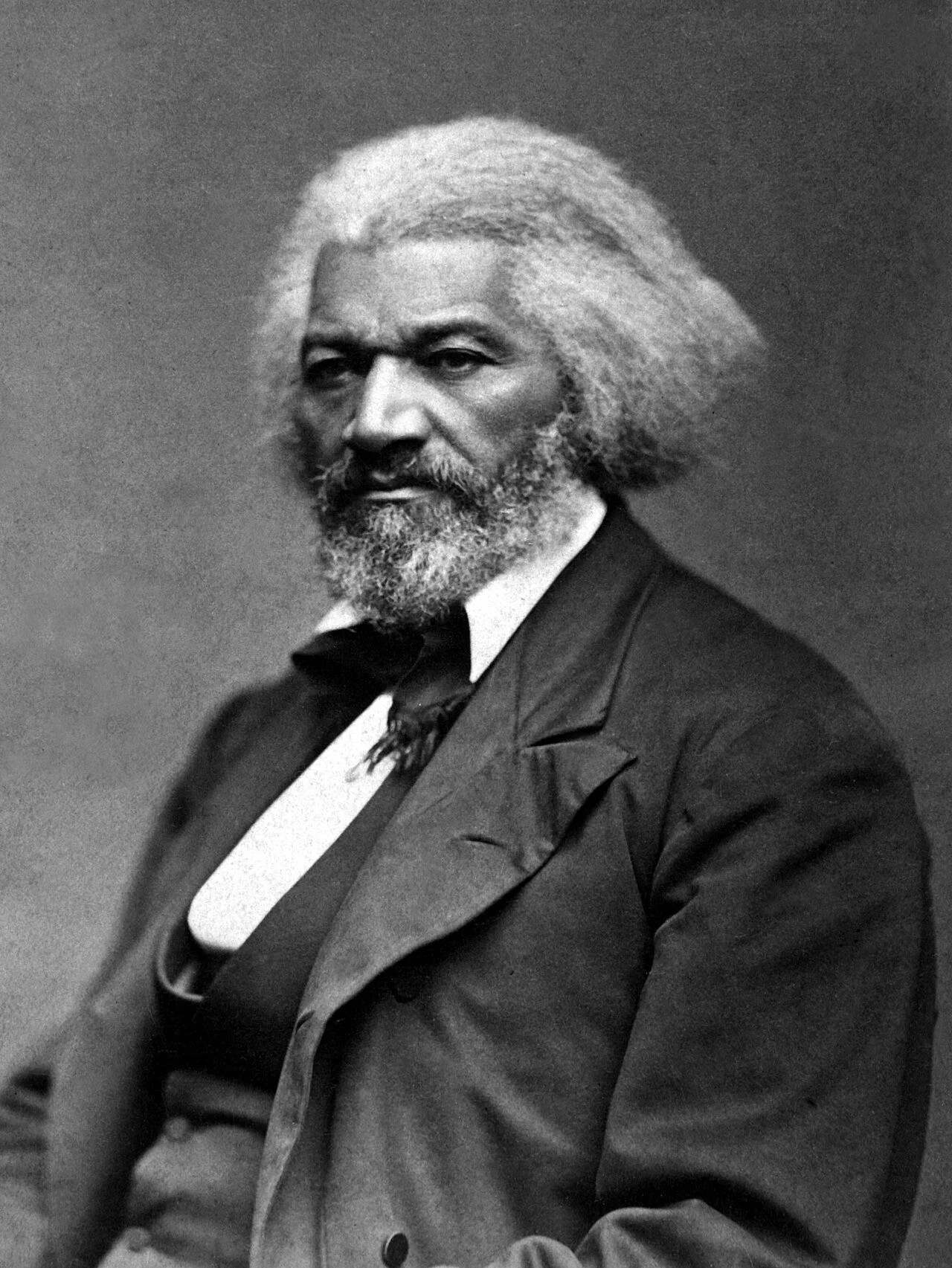
Frederick Douglass, born Fredrick Augustus Washington Bailey, was born enslaved in Maryland in 1818 on a farm in Talbot County. Shortly after birth, he was sent to live with his grandmother on the outskirts of the plantation. His mother, Harriet Bailey, was a field slave hired out to a different plantation, which made it difficult for them to see each other. His father was of European descent.
At the age of 6 Frederick Douglass was removed from his grandmother’s care to work at the Wye House plantation. Following this displacement, Douglass was given to Thomas and Lucretia Auld, who ultimately sent him to work with his brother Hugh in Baltimore. Douglass credits Hugh’s wife Sophia with first teaching him the alphabet.
Despite laws and punishment meant to prevent enslaved people from gaining knowledge, he secretly learned to read and write. Realizing that literacy was a path to liberation, Douglass went on to teach others on the plantation to read using a bible. For these actions, he was subsequently sent to a farm owned by Edward Covey. This is characterized as a particularly dark time in Douglass's life. Having reached the age of 16, beatings were commonplace.
In 1838, with the help and encouragement of a free Black woman named Anna Murray, he escaped slavery. Born free in Maryland, Anna worked as a tailor. She provided him with money for his journey north, and sewed the sailor suit disguise that enabled him to travel to freedom.
The two later married and settled in Massachusetts. It was around this time that Fredrick was exposed to abolitionist writings and organizations, and took on the last name Douglass after a character from “The Lady of the Lake,” a poem by Sir Walter Scott.
HISTORY
The Story of Anna & Frederick Douglass
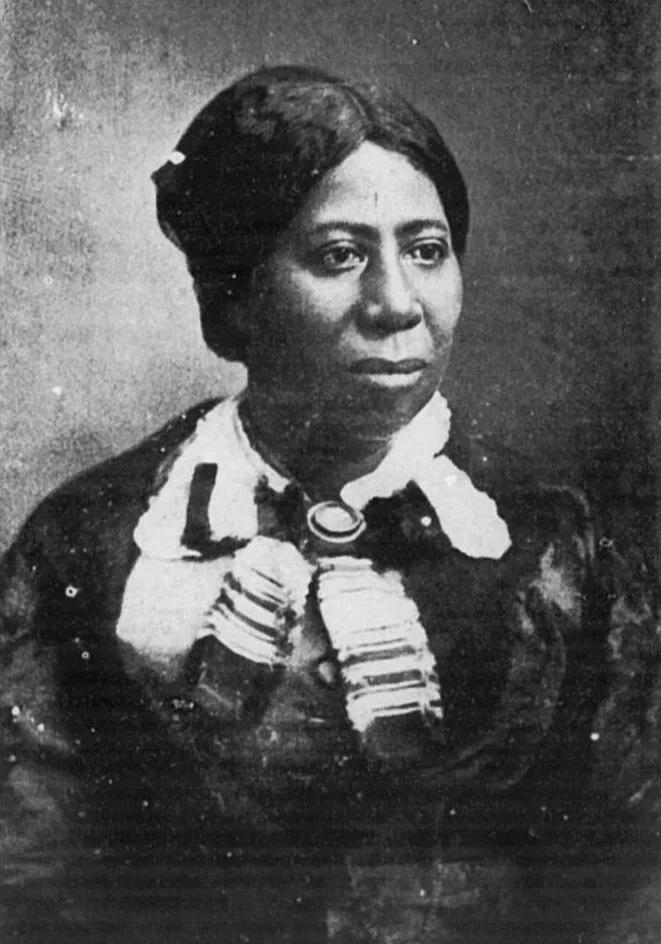
Douglass soon became a powerful speaker in the abolitionist movement and drew large crowds who were moved by his firsthand descriptions of slavery. Anna created a stable home for their family, raising their children Rosetta, Lewis, Frederick Jr., Charles, and Annie, while Frederick traveled widely as a speaker and activist. In 1845, he published his first autobiography, Narrative of the Life of Frederick Douglass, an American Slave, which gained national attention and confirmed his role as a leading voice against slavery. During this time, he traveled internationally and noted the kindness and dignity he was treated with when in Ireland and Great Britain.
In 1847, Douglass expanded his influence further by establishing The North Star, an abolitionist newspaper based in Rochester, New York, which he operated with the support of his family. The paper argued for the end of slavery, racial equality, and women’s rights. With Anna Douglass as the editor, and Douglass’ sons sending first hand updates on war conditions, the paper became a source of news for black and abolitionist news. Anna Dougass was described as a central pillar by Douglass. During the Civil War, Douglass advised President Abraham Lincoln and advocated for the recruitment and fair treatment of Black soldiers, including his own sons who served in the 54th Massachusetts Regiment.
After slavery was abolished, the Douglass’ worked tirelessly for civil rights, voting rights, and women’s suffrage, later holding respected government positions. Fredrick continued speaking and advocating for justice as Anna continued to provide a stable home for their children. Anna Douglass (1813-1882) and Frederick Douglass (1818-1895), leave behind a legacy of courage, leadership, and dedication to freedom.
Chicago’s Douglass Park
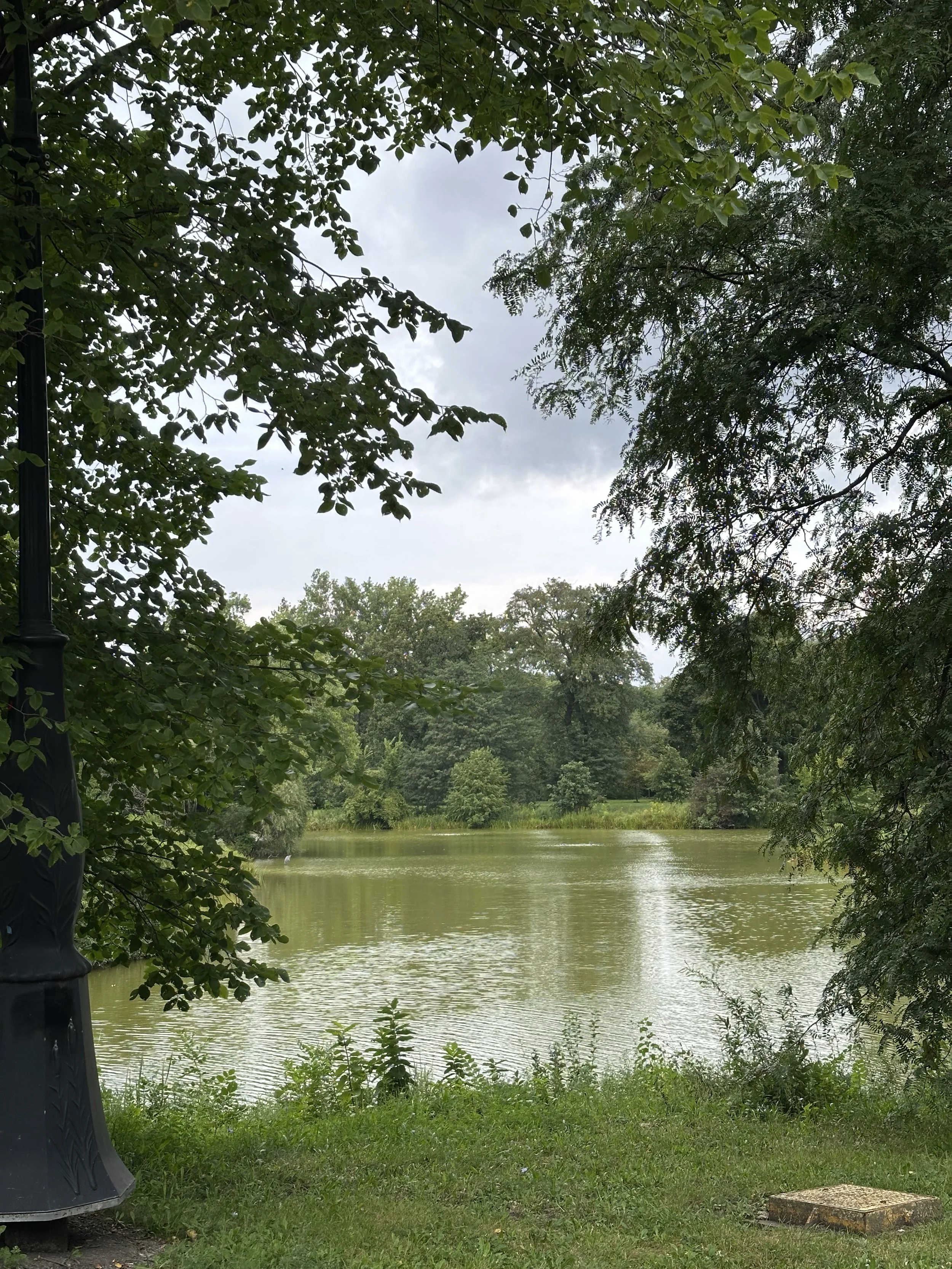
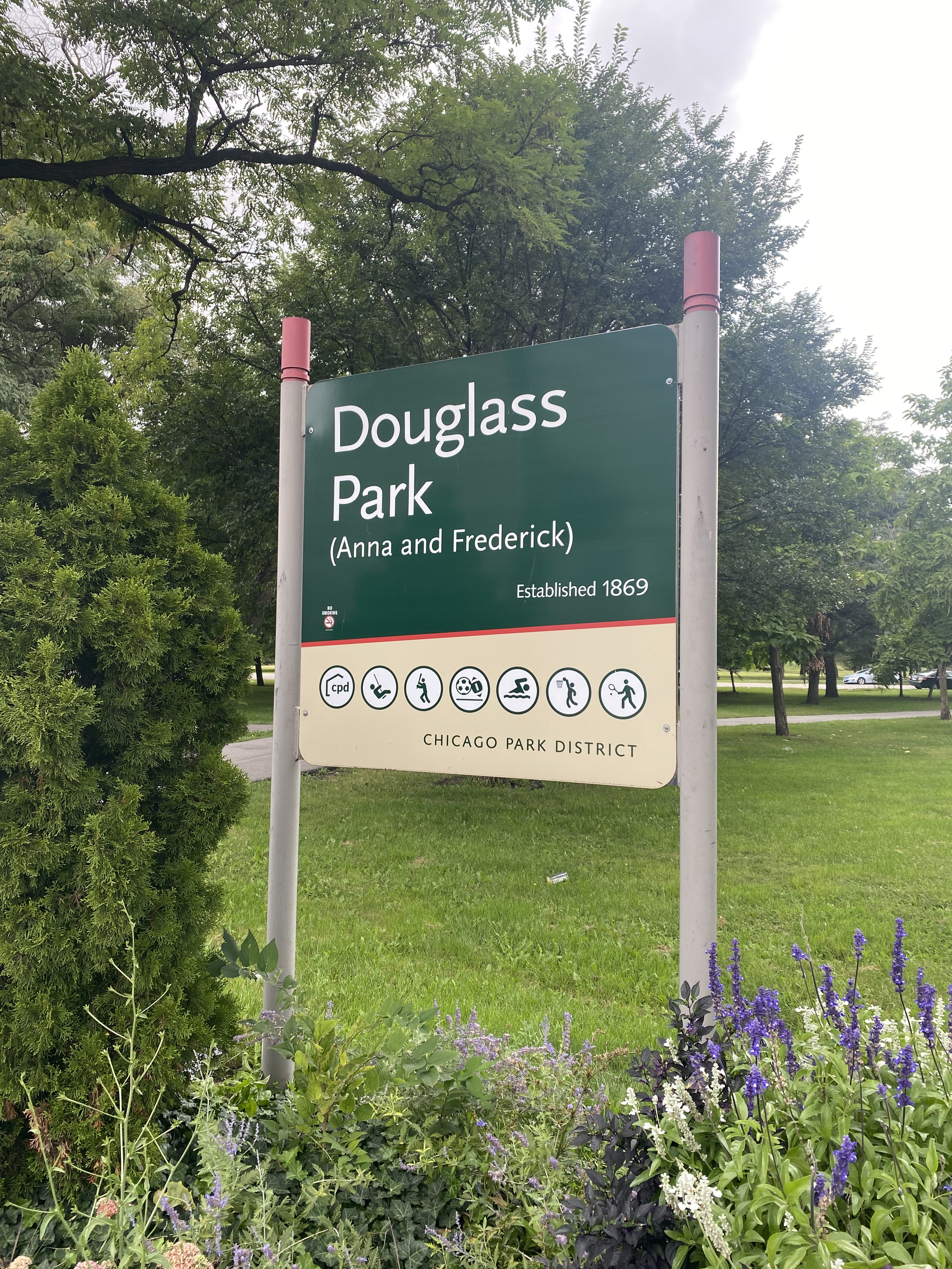
Designed by William Le Baron Jenney and later improved by landscape architect Jens Jensen, Anna and Frederick Douglass Park in Chicago was established in 1869 as "South Park". In 1871 the park’s name was changed to "Douglas Park" to honor the U.S. Senator Stephen A. Douglas. In 2020, following a campaign by local students, it was officially renamed to honor abolitionists Frederick Douglass and his wife, Anna Murray Douglass, after the original name was deemed an insult to the Black community. The change was initiated by students at the Village Leadership Academy who had been advocating for the change since 2016. The students chose this name after their initial proposal to honor Rekia Boyd, who was shot and killed nearby in 2012, was rejected. The renaming was seen as a way to replace a name honoring a slave owner with one that celebrates a Black abolitionist family, and exemplifies the revolutionary spirit that lives on in the North Lawndale community.
Name Change
"On September 9, 2020, the Chicago Park District Board of Commissioners voted to officially remove the name of Stephen Douglas from the park, and on November 18, 2020, the Board voted to officially name the park in honor of Anna and Frederick Douglass. The community requested the park be renamed to honor two historical abolitionists, Anna Murray Douglass and Frederick Douglass." -Chicago Parks District